
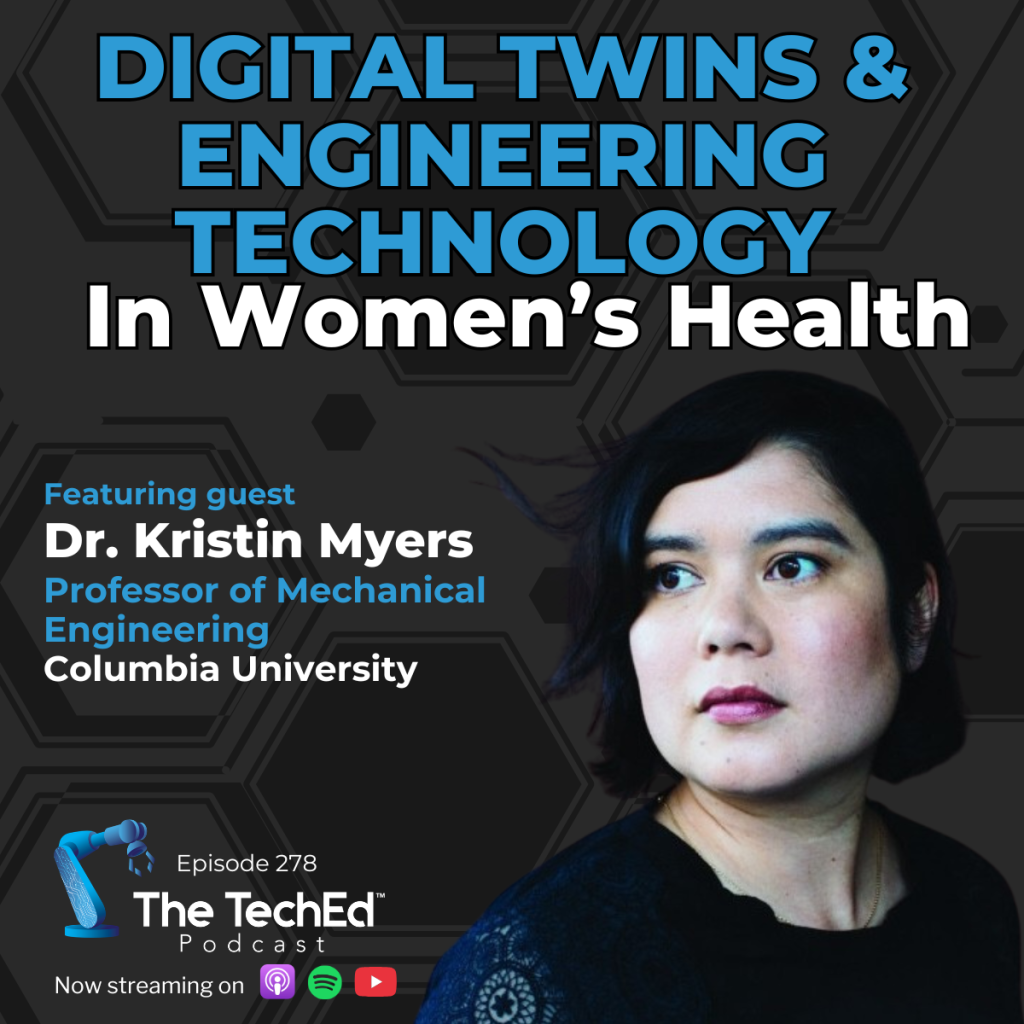
Mechanical engineers have helped revolutionize manufacturing through digital twins, simulation and AI. Could those same technologies transform healthcare? Dr. Kristin Myers explains why the future of medicine will increasingly depend on engineers working alongside clinicians to develop smarter diagnostics, predictive models and personalized care.
Education
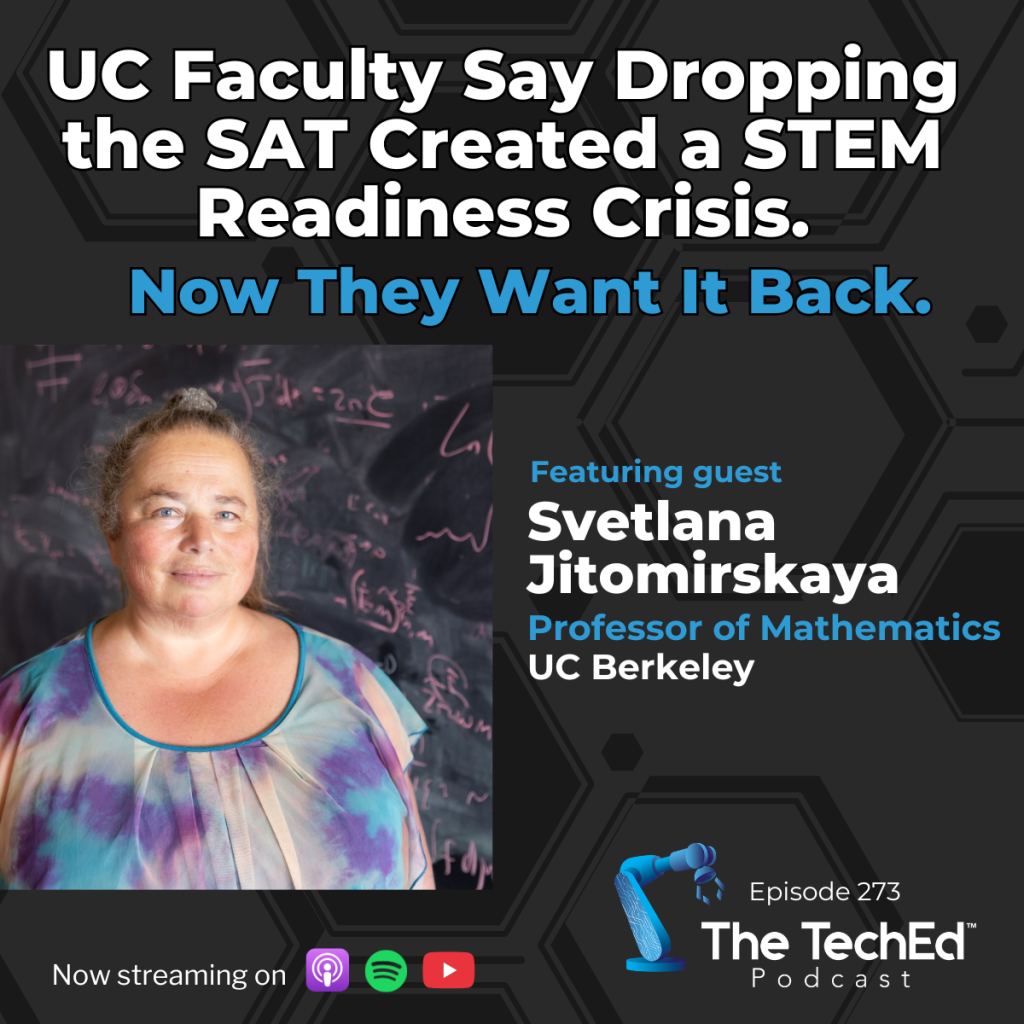
UC dropped the SAT. Faculty say the move hurt the students it was meant to help and created a STEM readiness crisis. Now, an open letter to the UC Board of Regents is calling for the SAT to return. We asked WSJ op ed co-author and open letter advocate Svetlana Jitomirskaya to discuss the issue.
Can technology solve humanity’s biggest problems without losing sight of ethics, business reality and human purpose? This episode explores a new definition of innovation for the next workforce.
A live panel from ACTE on how educators, employers, and students each shape work-based learning, career readiness, and stronger pathways from high school into the workforce.
The Mission Generation Wants Impact. Must They Choose Between Tech and Public Service? Arun Gupta, CEO of NobleReach Foundation and Co-Author of The Mission Generation Love the episode? Leave a review on your favorite podcast platform! ⭐⭐⭐⭐⭐ What if the
Is Your Organization Drifting? The 9-Step System to Reset and Lead with Clarity Jay C. Richards, U.S. Navy SWCC (Ret.), Author of The Standdown Framework Love the episode? Leave a review on your favorite podcast platform! ⭐⭐⭐⭐⭐ What can organizational
Listener questions lead to a wide-ranging discussion on education, careers, entrepreneurship, technology, and the evolving expectations shaping today’s workforce and tomorrow’s opportunities.
AI isn’t coming to CTE — it’s already here. Andrew Neuendorf explains how applied AI is reshaping technical programs, where disruption is real, and why education must move faster.
As employers shift toward skills-based hiring, trusted third-party credentials are gaining importance. Kathleen McNally explains how rigorous certifications reduce risk, create workforce alignment, and support lifelong learning across industries.
Many young professionals entered the workforce after formative years spent in isolation and Zoom classrooms. As a result, workplace courtesies that once felt intuitive now require explicit instruction. Leaders can no longer assume professional norms are ingrained, so here’s how to reset expectations without blame.
For Young Professionals, Workplace Courtesy Is No Longer a Given Episode Details »
Career Exploration Without Barriers: A Middle & High School J-Term Experiment Josh Davis & Melissa Phillips, Camanche Community School District Love the episode? Leave a review on your favorite podcast platform! ⭐⭐⭐⭐⭐ Imagine giving middle and high school students a
Culture shifts when trust and influence align. In this episode, Ben Johnson and Bobby Dodd share the Cultural Mapping framework leaders use to see how influence really moves through an organization, identify formal and informal influencers, and build the trust that turns resistance into momentum.
Higher education is shifting toward a connected model where colleges and universities work as one learner ecosystem. This episode explains what that looks like in practice—stackable credentials, seamless transfer, and flexible pathways that let learners move in and out of education without losing momentum.
Go inside Amazon’s highly automated facilities and learn how the RME team develops the technicians who keep complex robotics and mechatronics systems running. This episode breaks down the apprenticeship model, core skills, and workforce strategy behind one of the country’s most advanced automation environments.
States are stepping directly into venture capital — and Michigan is leading the way. In this episode, Matt Kirchner talks with Alison Todak of the MEDC and Pete Martin of the MSU Research Foundation about why state-backed VC is rising, how PitchMI fuels early-stage innovation, and what this shift means for founders, investors, and the future of tech and talent in the Midwest.
The Rise of State-Backed VC: Michigan’s Bet on Emerging Entrepreneurs Episode Details »
Predictions for Technical Education in 2026 Matt Kirchner, Host of The TechEd Podcast Love the episode? Leave a review on your favorite podcast platform! ⭐⭐⭐⭐⭐ With the pace of change in technology, geopolitics, infrastructure, and the economy, what should technical
13 Predictions for Technical Education in 2026 Episode Details »
Ask Us Anything: Workforce ROI, AI Hallucinations, and World-Class CTE Matt Kirchner – Host & Melissa Martin – Producer of The TechEd Podcast Love the episode? Leave a review on your favorite podcast platform! ⭐⭐⭐⭐⭐ After the feedback on our
China is moving at a speed and scale the U.S. has never seen—and we saw it firsthand. In this episode, Matt Kirchner and Ashley Furniture CEO Todd Wanek break down what they witnessed inside China’s most advanced tech companies, robotics labs, logistics hubs, and manufacturing clusters, revealing insights few Americans ever get access to.
Artificial intelligence isn’t just ChatGPT anymore. LtGen Brian Cavanaugh, CEO of VigilanteX, joins Matt Kirchner to talk AI agents on the edge, safety and security, national defense, and why students must understand the full edge-to-cloud continuum.
Southwest Ohio built a high school aviation campus shaped by its regional economic DNA. Learn what CTE leaders everywhere can take from Butler Tech’s flight, maintenance, and engineering model.
MATC President Dr. Anthony Cruz breaks down how technical colleges can end generational poverty, build economic mobility, and prepare students for an AI-driven workforce—all while serving one of the nation’s most diverse student populations.
Moving from “Just-in-Case” Education to a Demand-Driven, Industry-Led Model Paul Lavoie, Vice President of Innovation and Applied Technology at the University of New Haven Love the episode? Leave a review on your favorite podcast platform! ⭐⭐⭐⭐⭐ Higher education can’t keep
What does it really take to get started with artificial intelligence in a small or mid-sized company right here in the U.S.? In this two-part series, Matt Kirchner breaks down a practical, actionable framework for implementing AI in your business.
How to Get Started with AI in Your Business (Practical Tips & Real Technologies) Episode Details »
$1 trillion in new manufacturing investment is coming to rural America. Duwain Pinder of McKinsey & Company explains what it means for schools, employers, and the future workforce
The Wanek Center of Innovation is changing everything: 39 robots, digital twins, industry pathways, and a new model for advanced manufacturing education. In this episode, we unpack how true alignment between education and industry has transformed the future of tech talent.
Advice for students from elementary school through their first interview; the war for high-skilled talent (and how education can help); and the growing rise of artificial intelligence in the classroom & workplace
Ask Us Anything: Early Career Choices, the War for Talent and the Rise of AI Episode Details »
Technical colleges don’t look like they did three years ago—and the next decade will flip higher education on its head.
In this conversation, Layla Merrifield, President of the Wisconsin Technical College System, shares why these institutions are leading education innovation, preparing diverse learners, and driving the future workforce.
Four leaders from K-12, higher education, manufacturing, and startups share how AI is reshaping learning, operations, and workforce development—recorded live at TitletownTech in this cross-sector panel.
Applied AI in K-12, Higher Ed and Industry – Live Panel from Titletown Tech Episode Details »
Scholarships, internships, and trust—the real investments shaping lives. This episode explores how education creates opportunity for first-generation students and builds stronger communities for the future.
WRTP | BIG STEP is leading a $10 million apprenticeship initiative with national implications. CEO Lindsay Blumer shares how this effort is reshaping workforce systems and building scalable, industry-aligned talent pipelines.


